The precise composition of blood and RBC varies between individuals. This difference makes a person’s blood type. Most people use the ABO system to group blood types, as well as rhesus factor, which is either positive or negative.
ABO blood grouping present in a population due to multiple allelism. This blood typing is due to the presence of different sugars that linked to the lipid part of plasma membrane called an antigen.
The antibodies are present in blood plasma. Always a person carry two opposite kind antigen and antibody to prevent blood coagulation. It is also an important step in blood transfusion. Same antigen and antibodies will react and cause agglutination
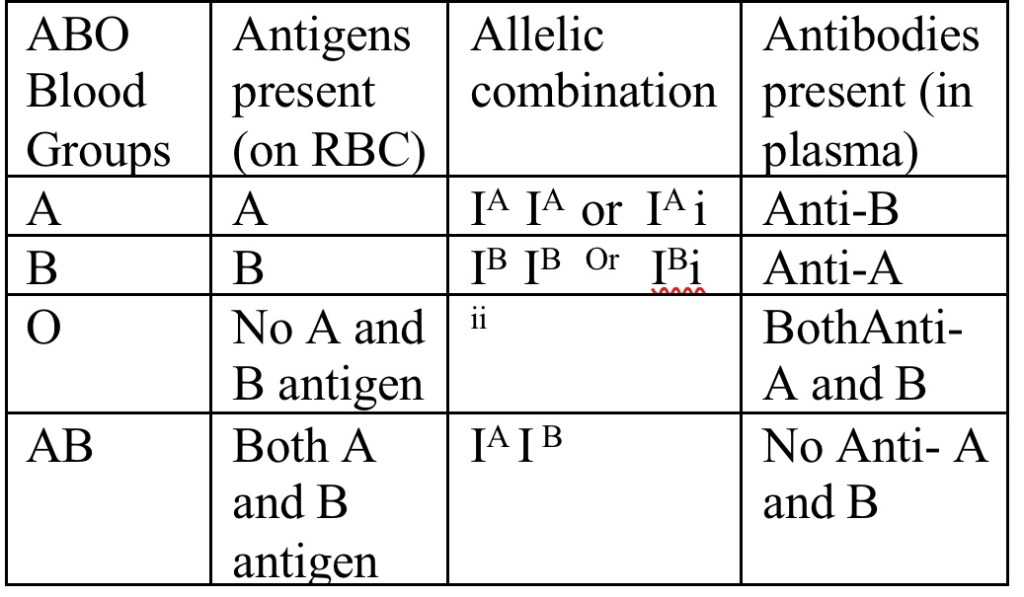
If any foreign cell entered into body, it illicit an immune response. So if person1 with A blood group gives blood to a person 2 with B blood group, the the antigen-A carrying RBC became foreign to the person 2 with B blood group. Foreign antigen A of person 1 will react with anybody A of person 2 and cause agglutination that ultimately cause death of RBCs.
Blood typing is a method to tell what type of blood you have. Blood typing is done so you can safely donate your blood or receive a blood transfusion. It is also done to see if you have a substance called Rh factor on the surface of your red blood cells that we will discuss later.
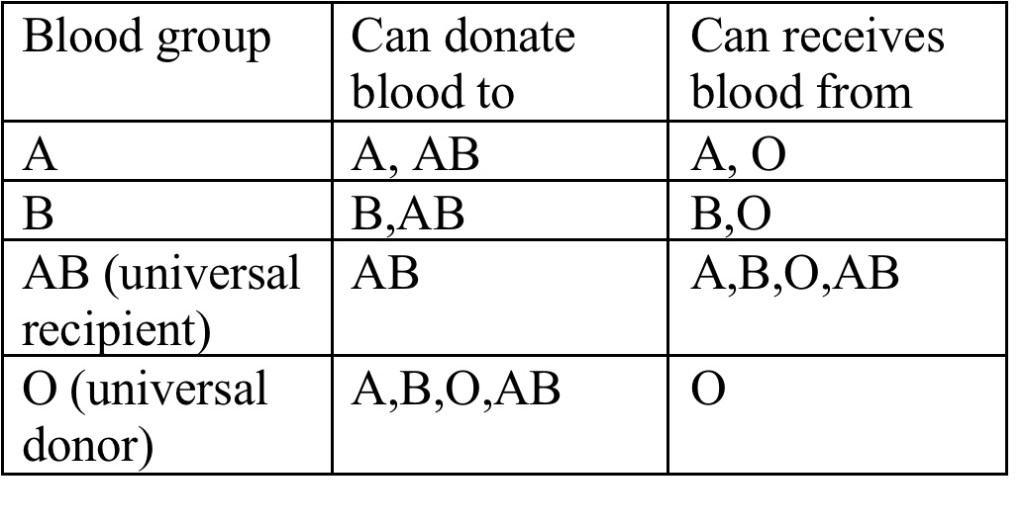
Table to show who can donate or receive blood for ABO blood grouping system.
Rh Blood grouping
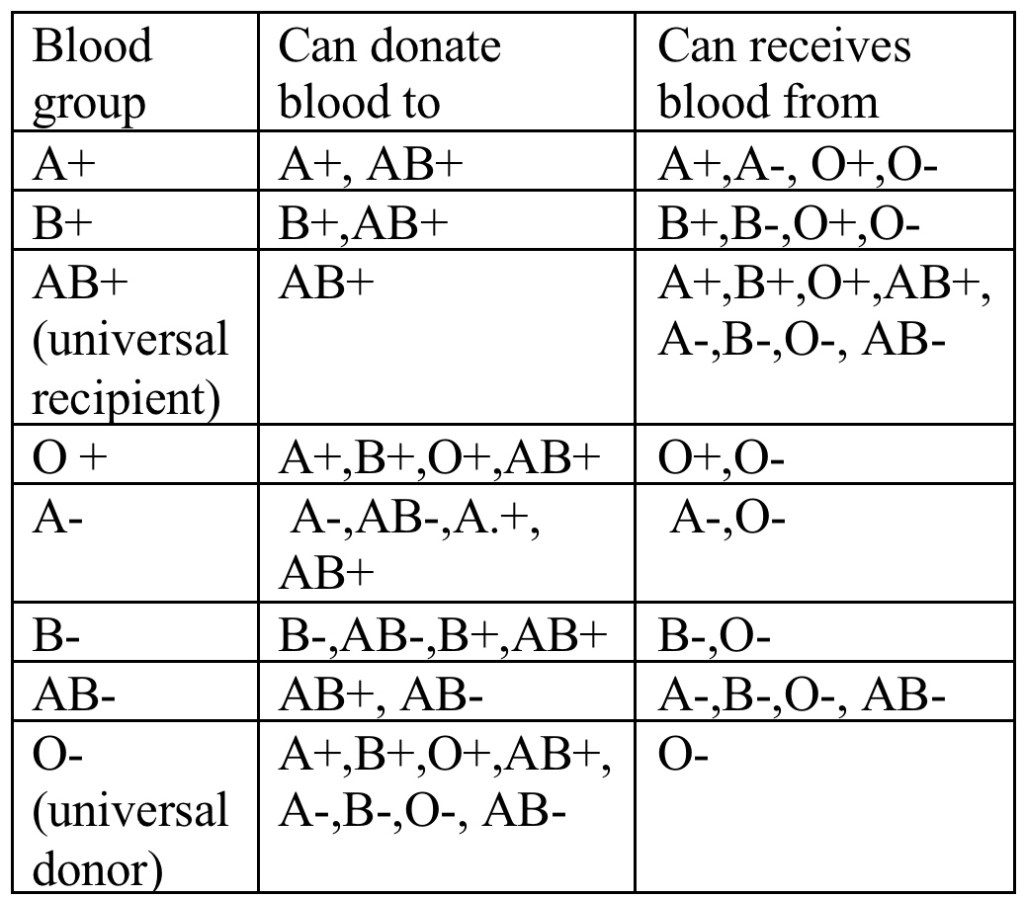
Rh factor it was discovered by Landsteiner and Weiner. Rh factor is an independent antigen present on the RBC irrespective of the presence of Antigen A or B. If this antigen present on RBC, then the person is Rh positive and if this antigen absent on RBC, then the person is known as Rh negative. After the discovery of Rh blood grouping, the ABO and Rh at a time are considered before blood transfusion.
It is explained in the given table:-
If a Rh negative individual gets blood for the first time from Rh positive individual, then it’s immune system produces Ig G type antibody against positive blood which is called Rh sensitisation. Second time if again the Rh negative individual receives blood from Rh positive individual, then the Ig G antibodies present in its blood start destroying the Rh positive RBCs.
The same thing happened when Rh negative mother carry Rh positive foetus for the second time too. If the second foetus is also Rh positive, then the Ig G antibodies (produced during the child birth of 1st Rh positive baby due to mixing of Rh positive blood with mother’s Rh negative blood) present in mothers blood cross placenta and start destroying foetal RBCs. This haemolytic disease is called erythroblastosis fetalis.
 Biology Empire