The most fascinating feature of Nucleic acids is self-replication which is not seen in other biomolecules. The monomer of nucleic acid is nucleotide. A nucleotide is made up of the following components:-
- Pentose sugar
- Nitrogenous bases Purines
Pyrimidines - Phosphoric acid
Based on the type of pentose sugar present and a difference in a kind of pyrimidine present, nucleotides are of 2 types:-
- Ribonucleotide
- 2’ Deoxyribonucleotide
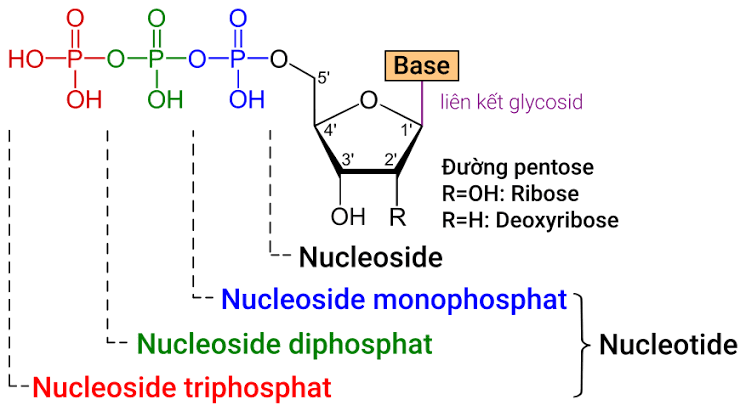
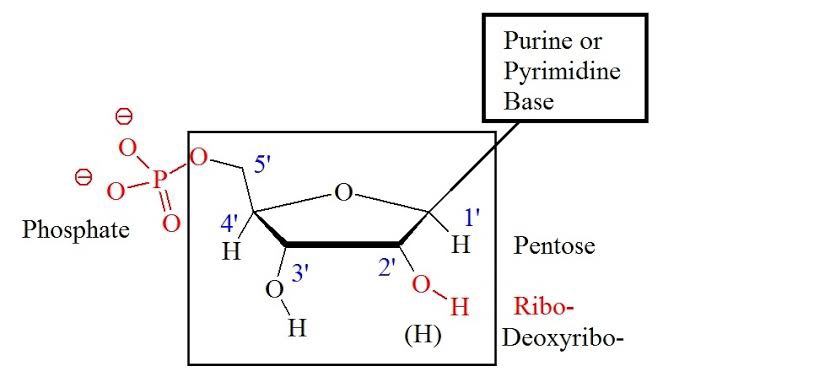
RIBONUCLEOTIDES
1.Ribose Sugar
Molecular Formula:- C5 H10 O5
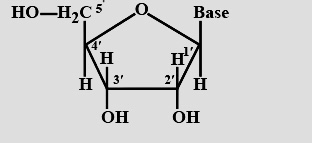
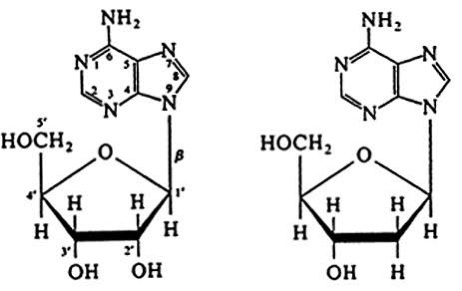
Structural Formula:-
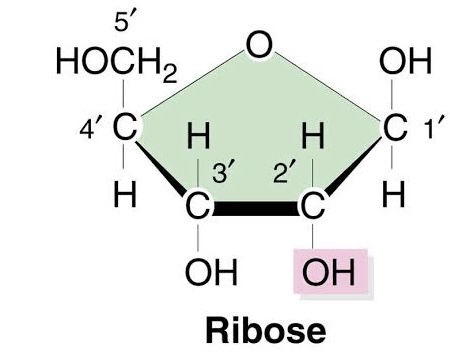
Ribose sugar is a kind of pentose sugar containing 5 carbon atoms. It is present in beta form. In beta ribose, the hydroxyl group of first carbon and the hydroxyl group of 5th carbon are present in CIS form. Both the second and 3rd carbon carry Hydroxyl group.
The nitrogenous base is added to the first carbon to produce a a ribonucleoside first. To the 5th carbon, a phosphate group is attached to Produce ribonucleotide.
2.Nitrogenous Bases
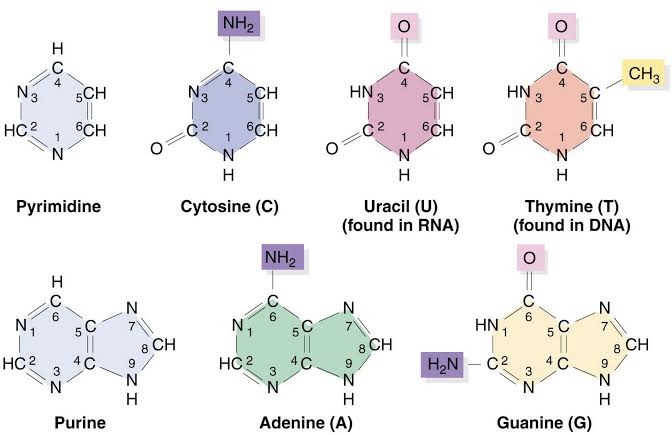
A.PURINES
- Purines are heterocyclic Nitrogen containing aromatic compounds that consist of 2 rings.
- 2 types of purines found in both deoxyribonucleotides and ribonucleotides.
- They are adenine and guanine.
- Addition of base to first carbon of ribose sugar produces a ribonucleoside.
B.PYRIMIDINES
- Pyrimidines are heterocyclic Nitrogen containing aromatic compounds that consist of 1 ring.
- 2 types of Pyrimidines present in ribonucleotide..
- They are cytosine and uracil.
- 3.PHOSPHATE GROUP
- When a Phosphate group is attached to the 5’ carbon of ribonucleoside, a ribonucleotide is formed. The bond through which it is joined with the 5’ carbon of ribonucleoside is phosphoester bond.
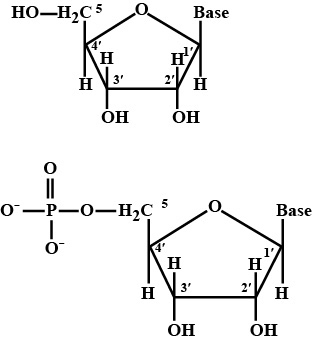
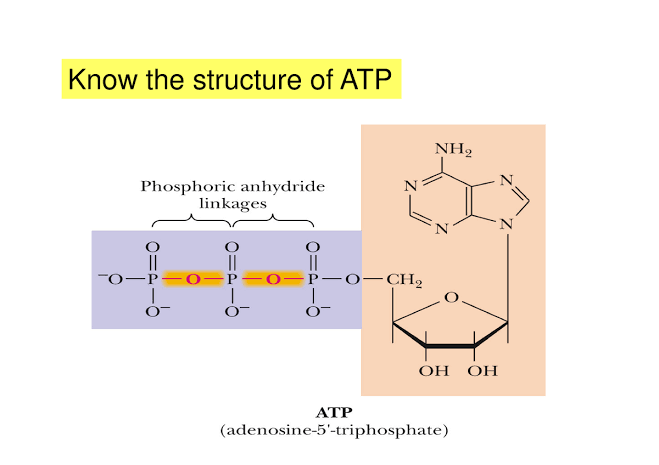
Addition of one phosphate group to the above ribonucleoside monophosphate produce ribonucleoside diphosphate and one more phosphate group to ribonucleoside diphosphate produces ribonucleoside triphosphate.
2’-DEOXYRIBONUCLEOTIDES
1.2’-deoxyribose Sugar
Molecular Formula:- C5 H10 O4
Structural Formula:-
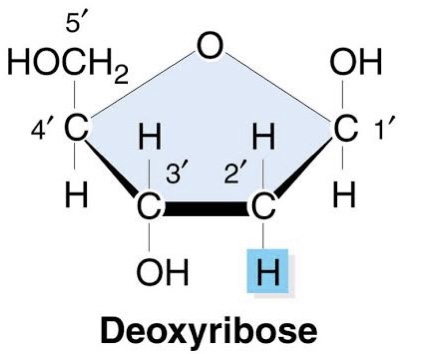
2’-deoxyribose sugar is also a pentose sugar containing 5 carbon atoms like ribose. It is also present in beta form in living organisms.In beta form, the hydroxyl group of first carbon and the hydroxyl group of 5th carbon are present in CIS form. It is called 2’-deoxyribose due to the absence of one oxygen in the second carbon. It lacks one oxygen as in place of hydroxyl group 2’ carbon carries one -H group. But the 3rd carbon carry Hydroxyl group.
The nitrogenous base is added to the first carbon to produce a a 2’-deoxyribonucleoside first. To the 5th carbon, a phosphate group is attached to Produce 2’-deoxyribonucleotide..
2.Nitrogenous Bases
A.PURINES
- 2’-DEOXYRIBONUCLEOTIDES also contain the purines, adenine and guanine just like ribonucleotides.
- Addition of base to first carbon of deoxyribose sugar produces a deoxyribonucleoside.
B.PYRIMIDINES
- One of the Pyrimidine present in 2’-DEOXYRIBONUCLEOTIDES is same as that present in ribonucleotides that is cytosine.
- But the second Pyrimidine present in 2’-DEOXYRIBONUCLEOTIDES is different that is Thymine. A little modification occur in uracil to produce thymine,I.e, addition of one -CH3 / methyl group in 5th carbon. So thymine is also known as 5-methyl uracil.
- 3. Phosphate Group
- When a Phosphate group is attached to the 5’ carbon of 2’-DEOXYRIBONUCLEOSIDE, a 2’-DEOXYRIBONUCLEOTIDES is formed. The bond through which it is joined with the 5’ carbon of 2’-DEOXYRIBONUCLEOTIDES is phosphoester bond.
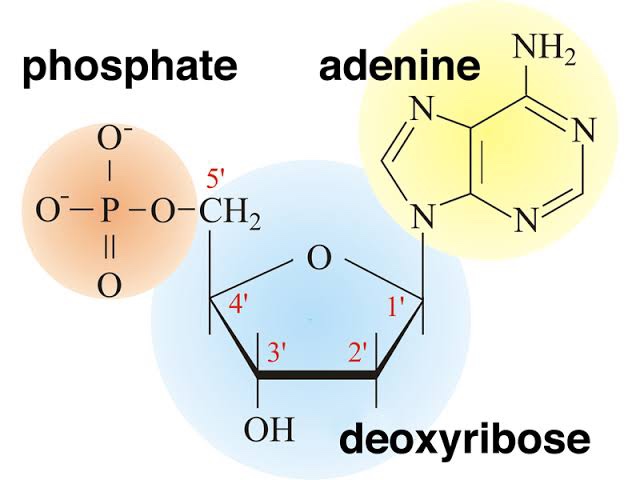
- Addition of one phosphate groups to the above 2’-DEOXYRIBONUCLEOSIDE monophosphate produce 2’-DEOXYRIBONUCLEOSIDE diphosphate and one more phosphate to 2’-DEOXYRIBONUCLEOSIDE diphosphate produce 2’-deoxyribonucleoside triphosphate.
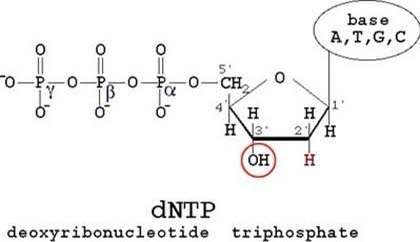
Ribonucleotides are building blocks of RNA and 2’-deoxyribonucleotides are building blocks of DNA.
Question :- Why nature select DNA as the genetic material of living organisms but not select RNA?
 Biology Empire
Very Informative article.
Well explained.
LikeLike
The content is very knowledgeable and very well explained 👍
LikeLiked by 1 person
Thank you
LikeLike
This piece of information is very well explained and handy in terms of quick revision and the diagrams are really helpful.
LikeLiked by 1 person
Thank you. Share it with your friends and juniors
LikeLike